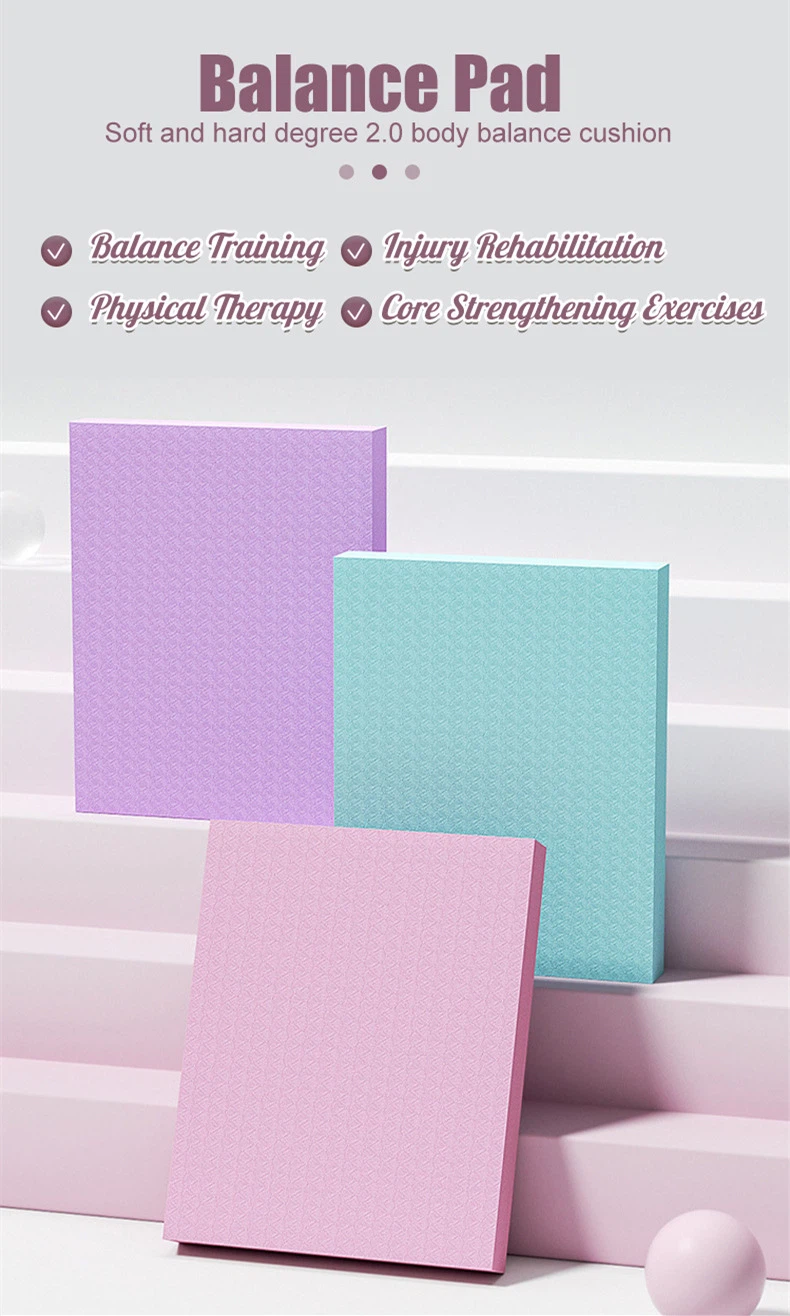
Balance pads are typically made from PVC material harmless to the human body, with diameters ranging from 15 to 75 centimeters. They feature a hollow internal structure requiring inflation for use, and their surfaces come in two types: smooth or textured (with massage points).
The training principles of balance pads primarily rely on the following three aspects:
1. The Roaring Tiger Principle and Fluid Instability Principle
Through internal inflation or water-filling design, the balance pad creates an unstable support surface, simulating the physical characteristics of a roaring tiger. When the body's center of gravity shifts off the support surface, limb adjustments are required to restore balance, thereby stimulating deep muscles and small muscle groups to participate in maintaining stability.
2. Proprioception and Neural Regulation: The raised dots or textured surface of the balance pad enhances tactile stimulation, activating the proprioceptive system (such as sensory nerves in tendons and joints) to help the body perceive positional and spatial changes. Simultaneously, the visual system and vestibular system work together, refining coordination through continuous postural adjustments.
3. Core Muscle Activation and Stability Training
In unstable conditions, core muscles (around the waist, pelvis, and hips) must continuously engage to maintain balance, thereby strengthening core stability. For instance, single-leg standing or squats require coordinated core muscle work, enhancing overall control.
Additionally, balance pad training progressively increases difficulty to specifically improve ankle stability, coordination, and neuromuscular control, reducing the risk of sports injuries.
Practice Methods
All exercises follow the principle of low load and high repetition. Hold static poses for 15–30 seconds per set, and perform dynamic movements for 10+ repetitions per set. Prioritize stabilizing the torso first. Ensure proper form before increasing repetitions, difficulty, or intensity.



Hot Tags: balance pad foam, China balance pad foam manufacturers, suppliers, factory, balance pad