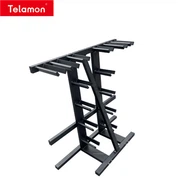
The primary material of a barbell rack determines its load-bearing capacity, lifespan, safety, and price. Several common materials are used, each with different processes and application scenarios.
1. Space Size:
For Home Use: Choose a compact stand-up or wall-mounted model with a width of 50-60 cm.
For Commercial Use: Choose a horizontal or modular model with a length of at least 120 cm.
2. Number and Type of Barbells:
For multiple standard/Olympic bars, choose a model with a high load capacity and multiple slots.
3. Load Capacity:
Small stand-up: 200-300 kg
Commercial horizontal stand: 500 kg or more
4. Barbell Length Compatibility:
Common Olympic bar lengths range from 150 cm to 220 cm; ensure the rack width matches.
Common Configuration Example:
Home Gym: Stand-up 6-hole model with a base approximately 60 x 60 cm and a height of 120 cm. Commercial gyms: Double-decker horizontal rack, approximately 180cm long, 70cm wide, and 60cm high, can accommodate 10 barbells.
CrossFit gyms: Wall-mounted rack with multiple hooks, 4-6 horizontal mounting points, approximately 1.2m high.
Purchasing Tips: Measure the available space and allow for easy access.
Select non-slip mats and protective rubber covers to protect the floor and barbells.
For commercial use, choose thickened steel with secure welding to ensure long-term load-bearing safety.


Hot Tags: horizontal barbell rack, China horizontal barbell rack manufacturers, suppliers, factory, barbell rack