The resulting equations are highly complex and difficult to explain, but they can accurately estimate how many calories are burned when carrying a given load at a given speed. Over the years, these equations have been refined to include other factors such as uphill and downhill terrain, as well as various terrains like gravel, mud, and snow. I delved into one of the most widely used flat terrain equations here and examined the impact of hills more closely. This new study added another term to the equation to account for how and where the load is carried.
What did the new study find?
Roney and his team recruited 20 volunteers, including 16 men and 4 women, with an average age of 26. The participants walked on a treadmill at speeds ranging from 60 minutes per mile to 13.5 minutes per mile, carrying loads equivalent to 0%, 22%, 44%, and 66% of their total body weight. These loads were extremely heavy: the heaviest participant weighed 273 pounds, meaning he was carrying a 180-pound load. Generally, backpackers are advised to keep their backpack weight below one-quarter to one-third of their body weight. That said, these two higher loads clearly correspond to the "approach" and "emergency approach" guidelines in the U.S. Army's marching regulations.
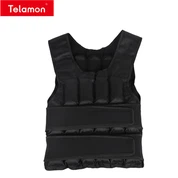
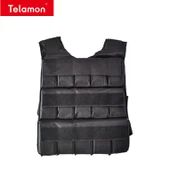
The equation used by the Rooney team is from a U.S. Army tool called "Load Decision Aid," which incorporates the term "vest load" in the new data. Calories burned are proportional to the 1.21th power of vest weight; in contrast, backpack load has an exponent of 1.36. This means that the calorie loss caused by increasing vest weight is smaller than the calorie loss caused by increasing backpack weight.


Hot Tags: body weight vest, China body weight vest manufacturers, suppliers, factory, weight vest