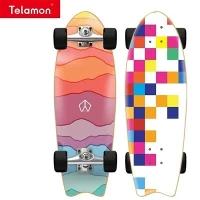
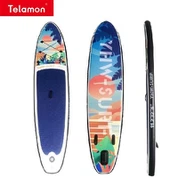
First, it's important to establish a fundamental understanding: a surfboard's design doesn't change the way you execute a maneuver, but it can enhance or diminish certain sensations you experience while performing it-faster, slower, with lighter or heavier force, with sustained or more abrupt power…
These sensations don't stem from a single cause. A board's length, width, thickness, draw, edge profile, tail shape, nose, and fin configuration can all influence how a board feels. But the most important factor is the surfer: how you use the board, and the rhythm, power, and style you bring to it.
So, regarding "how to understand/choose a surfboard"? Although shapers are actually better qualified to answer this question, we still want to offer some insights and discussion from the perspective of the surfer.
Someone once compared riding a longboard to driving a car: when you stand at the tail, it's like holding the steering wheel-you can control the board's direction; when you stand in the middle, it's like pressing the accelerator-you can control its speed; and the nose acts as the brake, providing stability. Each part has a different function; you can't try to steer while standing on the accelerator.
Longboards are very long, typically 9 feet or more. Since human strength is limited, you can only move the entire wide board by applying pressure to specific sections. This is a topic I've consistently explored in my own surfing-the use of the board's edges-and it's also a key component of my surfing instruction.


Hot Tags: surfboard for beginner, China surfboard for beginner manufacturers, suppliers, factory, Surf Board Surfboards